Category: Uncategorized

Acculturative Stress and it’s predisposition to mental health disorders among international students

By Bolanle Oyesile M.A

International students represent a significant, distinct, and increasing student population in many colleges and universities in the United States. Research has indicated that while they bring diversity to college campuses and the community around them and in exchange acquire a degree in higher education, their temporary immigration status exposes them to many challenges including experiencing acculturative stress in response to adjusting to their host country. Due to my struggles as an international student, I found it imperative to explore the connection that exists between acculturative stress and its predisposition to mental health disorders. When an international student relocates to the United States, the majority of the time, they are unaware of the challenges that lie ahead. In my case, I was unfamiliar with not only the culture but also the process of transitioning and adapting into society in all aspects. Through my research, there is enough evidence to conclude that acculturative stress significantly impacts the sociocultural well-being of international students. These difficulties are evident in the areas of culture shock, language barriers, academic stressors, and lack of social support system.

In addition, the critiqued literature suggested that perceived prejudice and discrimination are predictors of mental health in this population of students. While research acknowledges psychological and emotional difficulties, I believe it is not enough to broadly categorize them without knowing exactly what those challenges are in relation to specific mental health disorders. What specific mental health disorders do international students experience? How do these disorders present or manifest across several cultures? For instance, as a Nigerian, the concept of mental health is quite different from the Western perspective. Growing up in a society where mental health “is not a thing”, it wasn’t a surprise that it did not occur to me that I was going through depression when I did even though I have been a psychology major all through my tertiary education. I attributed my low mood, loss of appetite, feelings of hopelessness, and anhedonia, to being stressed from graduate school demands when in fact I was overwhelmed by the transitioning process into a new culture without adequate familial and social support to help navigate through the system.  Not only did I have to deal with acculturation and culture shock, but like other international students, I had to discover the psychological difficulties associated with the process on my own. I began to realize that this is not a conversation people have with you before and after moving to the United States for studies. Prior to migrating, I was aware of the culture shock and changes in academic structure, but no one informed me about how these stressors can take a toll on my mental health and what to do if and when it happens. 

Given the above, the impact of acculturative stress on an individual’s mental health cannot be overemphasized. I am one out of millions of other international students who come from various parts of the world with varying degrees of cultural perspective to the idea of mental health. Although underrepresented within the American society, international students are contributing members not only to the U.S. culture but to the economy as well as they generate billions of dollars every year. Within the state of Minnesota, we have a lot of universities around us that admit international students from all over the world. This means that we are likely to encounter them in clinical settings and if this happens, how do we approach their mental health needs if we are unaware of how they experience psychological difficulties? Therefore, I propose that further investigation is required to better understand the relationship between acculturation and mental health and the extent to which psychological distress presents, manifests, and is interpreted among international students. Furthermore, while international students may share similar experiences, it is important to recognize their cultural differences. As such, it is vital for prospective studies to take a multidimensional approach to cultural adaptation and psychological distress, as individuals adapt in different ways, and acculturation may differ not only by geographical location but also by country of origin.

In conclusion, the critiqued literature provides evidence to support the notion that several acculturation factors play a role in the transitioning of international students into American society. In particular, social, academic, and language stressors are strong predictive factors of acculturative stress in this population of students. Acculturation was also associated with the mental health and well-being of international students however, the degree to which psychological distress impacts them is unknown. As such, understanding acculturation through the lens of mental health among these students requires a complex and dynamic understanding of individual cultures and geographical regions.

Bolanle Oyesile M.A

Clinical Psychology Doctoral Student (PsyD)

Department of Psychology

Augsburg University, Minneapolis
Change in Student Dues: Co-Chairs’ Perspective

By David Van Engen Psy.D. & Amanda Janke M.A.

Several years ago, MPA chose to change student dues from a substantial fee to none in order to encourage new membership.  While this was successful (student membership quickly grew over 600), there was no system in place to effectively track these new memberships at an administrative level. As a result, it was not possible to know when students graduated, became full members, or moved out of state.

To best tackle this issue, we took several months to survey current student members, field questions, attend Membership Task Force meetings, and passionately debate the best way to resolve the above administrative issue without creating undue burden for student members. The Student Division -as students ourselves- acknowledged that any fees may represent a hardship. For that reason, we fought to ensure that students will have the option to check a financial hardship box with their membership renewal and waive this annual fee.

Based on this process, MPA leadership met for their quarterly meeting in July and a motion was passed to change student dues from $0 to $10 per year in order to allow for the system to accurately track memberships. We believe that a nominal annual fee with the option to waive the cost will allow us to serve everyone equitably. We understand that there may be concerns with this change and we are more than happy to listen and discuss (please, feel free to reach out).

Advice From a Clinical Psychologist and Neurodevelopmental Specialist

By Amanda Janke, M.A.

Specialist Interview

For those who may be considering specializing in child psychology, here is what Dr. Rachelle Hansen, co-chair of the Child Psychology division of the Minnesota Psychological Association had to say about being a Clinical Psychologist and Neurodevelopmental specialist.

 Her work consists of therapy, testing, supervising, creating curriculum, and teaching.  In 2015 she started the Stepping Stone Clinic with a vision that integrated mental health services with nutrition, occupational therapy, and cognitive training.  In 2021 she founded LifeFX, an executive functioning coaching program, to address the need for specialized interventions for executive functioning. When asked what made her choose this specialty, she said that it chose her.  Her love of the brain and biochemistry background steered her as well as this specialty being a perfect blend of her people-connection skills and nerdiness.

She reports her journey being a long one.  She started undergrad at age 15, being a first-generation college student.  However, she didn’t start clinical psychology graduate training until the age of 34.  She had dropped out of medical school and became a reading recovery teacher and worked for courts in helping to determine long-term placement care for children in the system.  To sum up her journey, she states “there is no “perfect” way of getting to where you want to be.”

When asked about strategies to take with this specialty, she recommended that students plan to work evenings and weekends if you want to work with kids and families, especially outside of a medical facility.  However, this is different between settings.  For example, private practice tends to have the most flexibility in hours but may also require you to work evenings and weekends more than other systems.  She recommends advocating for yourself and your situation to find a system that works best for you. 

 She also expressed that you need to find ways to protect your time.  For example, she tried to take a day off during the week to get her errands and social meetings done.  She chooses not to conduct testing in January to reward herself as well as prepare for the coming year by revising templates and protocols and avoid the slow period when client’s deductibles are high.  Overall, she says, “you alone cannot fix the system” when referring to the imbalance between number of providers and those in need.

The biggest take away from this interview with Dr. Rachelle Hansen, is to find balance in your work.  Whether it is finding the system that works best for you or finding a routine in the work you have.  Create boundaries to protect your time and remember, “you are an expert, but an expert can show vulnerability in not always knowing.” 

Thank you to Dr. Rachelle Hansen for taking the time to share her experience as a Clinical Psychologist and Neurodevelopmental specialist.  If you would like to learn more about Dr. Hansen and the Child Psychology Division, consider attending their next meeting.  Dates and times can be found on the Minnesota Psychological Association events calendar.        

Spotting a Predatory Journal

By Amanda Janke

Congratulations!  You’ve worked hard on collecting the data and writing a manuscript about your research.  Now what?  Publishing your manuscript in a journal is often a long and hard process but can be rewarding.  However, what happens when the publication process goes wrong?  What happens if you fall prey to a predatory journal?  Well, that happened to me, and I am writing this with the hope of helping you spot the predatory journal before submitting the manuscript you worked so hard on. From my experience, here are some helpful tips on how to spot a predatory journal right away:

First, and probably most importantly, if it seems too good to be true, it probably is.  Submitting a manuscript often means editing your current work to fit guidelines that the journal has, such as what the title page should look like, how graphs and tables are formatted, and page length.  If the journal just has a drop box and a place to put your contact information, it probably is not a journal you want to submit to.

Second, take some time to look at the journal’s website.  Is there complete contact information listed?  If there is incomplete contact information or it is not consistent across different parts of the website, that may be cause for hesitation.

Third, while you are looking at the website, look at some of the published articles they have available.  Do they look like they have been through the peer-review process?  Do they contain a lot of mistakes?  Additionally, if it is a journal with a specialty, are the published articles pertaining to that topic?  If they are publishing articles outside of their specialty or the articles have many writing mistakes, you may want to question why that would be.

Now, what happens when it is too late?  You’ve submitted to a predatory journal, you realized they published your work without your permission, and you demanded they take down your work via multiple forms of communication without any response.  Well, not all hope is lost.  According to the Committee on Publication Ethics (COPE) (2016), if there was no copyright transfer (you did not sign any documentation), you could still move forward with publishing in a legitimate journal and include a note to the editor, explaining what had happened.  

If you do happen to fall into the trap of a predatory journal, be sure to reach out to the institution in which you conducted the research, whether that is your school or work.  They may have some advice for you on how to move forward or have additional resources to fight back.  I was thankful to have my professors there to guide me.

**Please note that this advise is based on my own experience and may not apply to all situations.  Always do your research and talk to peers during the publication process.  They may have information that is more pertinent to your specific work.

Committee on Publication Ethics. (2016). Withdrawal of accepted manuscript from predatory journal. https://publicationethics.org/case/withdrawal-accepted-manuscript-predatory-journal

The MPA Student Division Stands with Ukraine


Two weeks ago, Russia launched an unprovoked and illegal invasion of Ukraine which continues to contribute to the deaths of hundreds of civilians, displaced millions, and cruelly tears from these people their homes, families, and sovereign land. The MPA Student Division stands in solidarity with the people of Ukraine, their loved ones, and all those affected by this war which threatens global stability. As future psychologists, we are aware of the unequal way that war and those who flee it are portrayed. It is important that we recognize and show our unequivocal support for all those who are displaced, regardless of their race or nation of origin. One can support the people of Ukraine and those in similar straits. We encourage all who can to provide support in whatever ways you can: be it in materials, time, empathy, or advocacy. 

While these are uncertain and frightening times, remember that as the future of the field of psychology, we can and should take action for the common good. Provide space for dialogue, take care of yourselves, peers, and those in your communities. Above all, do not give up hope.

Afghanistan

Syria

Ukraine

Yemen

International Red Cross

Community Activism

Local Crisis Resources

Standing in Solidarity with our Black Peers & Community Members

By Quincy Guinadi & David Van Engen

Today marks the start of Derek Chauvin’s murder trial, one of the four police officers responsible for the unjustifiable killing of George Floyd. As we speak, the city of Minneapolis has responded in preparation to this trial by building barricades and increasing the presence of law enforcement. This was not a sight that eases the mind and soul about the expectations of this trial. The folks at George Floyd Square recently requested that the space be reserved as a sacred for place Black grief and healing.

As student division chairs, who also identify as BIPOC students, we would like to acknowledge the emotional burden and toll of racism on our fellow Black peers. We empathize, grieve, and share the exhaustion of witnessing and experiencing racial injustice. An overwhelming body of research demonstrates that persistent experiences of racism are associated with deleterious effects on mental and physical health (Anderson, 2016). As graduate students, we have utilized the student of color groups in our schools as a safe space to receive and provide support to other BIPOC students. These are powerful spaces for healing and dialogue. We encourage our fellow BIPOC peers to seek out and utilize safe spaces unburdened by discrimination and White supremacy. If your school does not provide an adequate space for you, please reach out to us at studentdivisionmpa@gmail.com. We will stand with you.

For our non-BIPOC students and allies, we encourage you to consider how to use your power and privilege to educate and advocate for those affected by racial injustice and issues of equity. This article is a great place to begin a dialogue and take steps toward demanding a fair trial to hold those in power and in law enforcement accountable for their actions. Another great resource to explore and reflect on your own racial identity and power is “The Racial Healing Handbook: Practical Activities to Help You Challenge Privilege, Confront Systemic Racism, and Engage in Collective Healing” by Dr. Anneliese Singh, PhD, LPC.

As we brace ourselves for the trial that is expected to last 3-4 weeks, we stand in solidarity and support of our Black friends and community members. We demand justice and a fair trial to honor the pain George Floyd’s family had to endure as well as the anguish those families and communities affected by the loss of loved ones at the hands of injustice and police brutality. The NAACP said it well: “George Floyd was taken from us viciously, inexplicably, and inhumanely. Derek Chauvin is on trial to tell his side of the story. A luxury that was not afforded to George Floyd and countless other men and women within the Black community.”

Navigating the Collegiate Atmosphere as a First-Generation Student

By Linda Zheng & Dakota Leget

As a first-generation college student, it’s easy to feel disadvantaged or overwhelmed going into and throughout your college career. If you compare yourself to your peers, you may feel “behind” – perhaps in terms of professional, academic, and financial resources. This is a common experience for first-generation students, especially as many also identify with other disadvantaged groups (e.g., low socioeconomic status, underserved, underrepresented; Choy, 2001). We, like some of you, resonated with these feelings. Although there are obstacles as a first-generation student, there are also resources to help you navigate your college experience and upsides to embracing your first-generation college student status.

It’s common to be a first-generation student.

In terms of undergraduate students: The Center for First-Generation Student Success reports data from the 2015-16 National Postsecondary Student Aid Study which found that 56% of undergraduates nationally were first-generation college students, and 59% of these students were also the first sibling in the family to go to college!

Utilize services and resources to your advantage

There are organizations and programs to help you achieve success. Some common ones include Federal Work-Study and TRIO Programs (e.g., McNair Scholars Program, Student Support Services). First-generation students are often disproportionately lower-income than continuing-generation students (Tym et al., 2004). In our experiences, on-campus jobs were a great experience and allowed us flexibility with school commitments. Your college may also have other organizations and programs, such as a first-generation college students’ organization, which may facilitate friendships and normalize your feelings and experiences.

Asking for help demonstrates initiative

Another vital aspect of academic and professional success includes mentorship. Mentors can come in all forms—academic advisors, professors, bosses, and even other students. First-generation students may feel overwhelmed about how to achieve academic and professional success, especially due to feeling a lack of professional connections or lack of knowledge on how college “works”. Mentorship is important because it creates professional relationships and networking opportunities to prepare for your career. Often, mentors can offer invaluable insight into this process and aid first-generation students in forming professional connections. Though it may seem intimidating, sit down with an academic advisor and ask them about how you can prepare for your career—including activities outside of school (e.g., research, internships). Mentorship increases preparedness for your next step; it also helps you build strong professional relationships. Mentors may know of opportunities or positions they can connect you with once they know your long-term goals. We feel that asking for help or advice demonstrates initiative and courage. Whether you are in your graduate, undergraduate, or professional career, you will benefit from developing a relationship with someone you can consider a mentor.

Ultimately, we are thankful for being first-generation students. Our bachelor’s degrees and master’s degrees (in-process) feel bigger than just us. They represent our parents’ struggles and sacrifices to offer us more opportunities; these serve as inspiration and motivation in our academic and professional pursuits. Being a first-generation college student comes with additional obstacles. However, it can also lead to greater appreciation and value for higher education. It’s easy to feel disadvantaged when entering college as a first-generation student; you are not alone. There are other students in your position, mentors by your side, and programs designed to help you achieve success. As Dr. Abdul Kalam once said, “If you fail, never give up because F.A.I.L. means ‘First Attempt In Learning’.”

We would love to hear about how you embrace your first-generation student status!

References

Choy, S. (2001). Students whose parents did not go to college: Postsecondary access, persistence, and attainment (NCES 2001-126). Washington, DC: U.S. Department of Education, National Center for Education Statistics.

Martin Lohfink, M., & Paulsen, M. B. (2005). Comparing the determinants of persistence for first-generation and continuing-generation students. Journal of College Student Development, 46, 409–428.

Tym, C., McMillion, R., Barone, S., & Webster, J. (2004). First-generation college students: A literature review. Round Rock, TX: Texas Guaranteed Student Loan Corporation.


Linda Zheng (she/her) is a graduate student in the Master of Arts in Psychological Science program (Clinical-Counseling track) at the University of Minnesota, Duluth. Her current interests include interpersonal violence, trauma, and mind-body interventions. She is currently leading a research project examining maladaptive interpersonal schemas and coping responses in children receiving services at a community child advocacy center. In the future, she desires to work with underserved, underrepresented, and economically disadvantaged individuals.

Dakota Leget (she/her) is a first-year graduate student in the University of Minnesota Duluth Master of Arts in Psychological Science program (Clinical-Counseling track). She is dedicated to building a more inclusive future for heavier-weighted folks which is why her research interests include weight stigma, internalized weight bias, coping, and self-determination theory. In addition to research and studies, Dakota enjoys staying active, reading, cooking, advocating for equity, and cuddling with her cat, Poppers. Dakota’s future career goals include working with individuals with eating disorders, people with trauma, and members of the LGBTPQIA+ community.

New MPA opportunities!

  1. The MPA Ethics Committee is looking to increase our student membership!  Are you looking to increase your knowledge and gain experience regarding ethics consultation and build connections with other psychologists and students?  If so, then please submit a brief statement about why you would like to be a part of the MPA Ethics Committee and submit it to Dr. Catherine Cronmeyer, catcronemeyer@gmail.com

2. The Minnesota Psychological Association would like to invite you to join the MPA Diversity Book Club. We meet every two months and are currently on our third book: So You Want To Talk About Race, by Ijeoma Oluo.

Our next event is Thursday, January 21st. Our meetings are friendly and casual; most of us read the books but finishing (or even starting) them is not required. All that’s necessary is a desire to learn and participate. We have members from around the state and who use a wide variety of modalities, and we have some great discussions.

If you are interested, you can sign up here. If you have questions, feel free to email David Nathan at gdavid.nathan@gmail.com. Take care!

MPA SD Supports International Students

The Student Division of the Minnesota Psychological Association supports college students irrespective of their status as guests or residents in the United States. We find the recent policy announcements of the U.S. Immigration and Customs Enforcement agency (ICE) and support from the White House to be capricious, arbitrary, and morally abhorrent. Unfortunately, this is only the most recent in what has been a despicable series of outrages perpetrated against minorities and the disenfranchised by the Trump Administration. We wholly condemn this vile action and name it for what it is: Discriminatory policy founded on a racist ideology. The MPA Student Division calls on every college in the State of Minnesota to explore and devise options to ensure the rights of international students to complete their courses of study unimpeded and free of systemic harassment.

We call on colleges to openly condemn the actions of ICE and be vocal in their support for their international students. We urge your institutions to provide outreach and counseling support services to students who are now suffering distress, uncertainty, and fear. We recognize and praise the efforts of the University of Minnesota, Saint Mary’s University of Minnesota, University of St. Thomas, and other colleges that have already taken the first steps in this regard. As an organization, the Student Division stands with international students and welcomes any efforts to coordinate advocacy and planning.

The Student Division would like to hear from any international students and their peers whom have been affected by this recent action. You will be heard. You are not alone.


Quincy Guinadi and David Van Engen

Student Division Co-Chairs, Minnesota Psychological Association

www.mnpsych.org

www.mpastudentdivision.org

Image result for mn psychological association

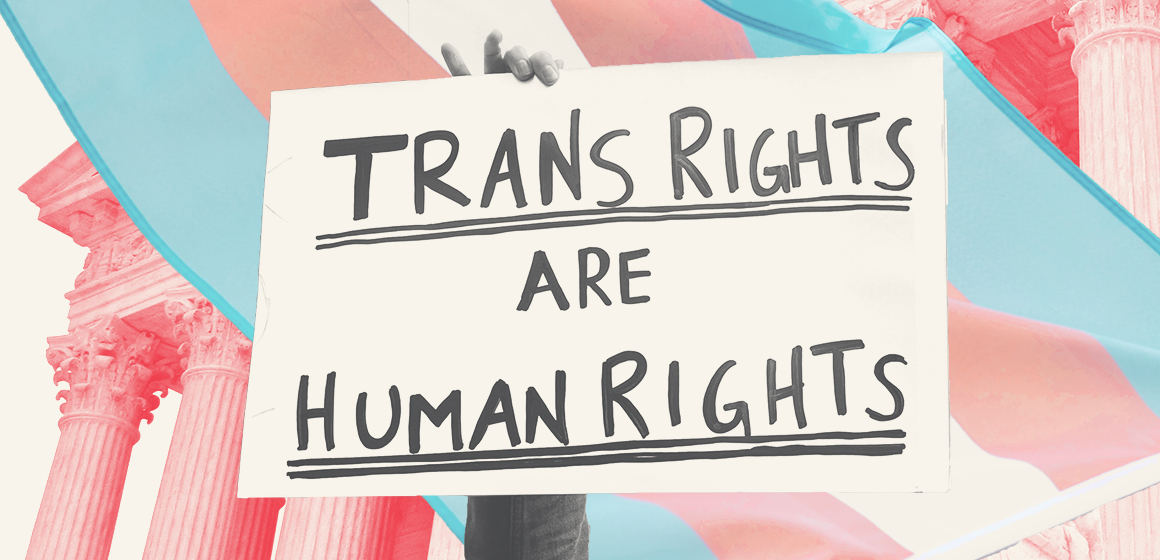
I can’t believe we have to say this… but trans people deserve healthcare!

By Milo Due & Quincy Guinadi

Credit: ACLU

On Friday, June 12, the Department of Health and Human Services finalized a decision to eliminate federal protections for transgender patients to prevent discrimination by healthcare providers including doctors, health insurers, and hospitals—protections that have been tirelessly fought for by generations of LGBTQAIGNC+ activists. In this decision, the Trump administration redefined sex discrimination as “only applying when someone faces discrimination for being female or male, and does not protect people from discrimination on the basis of sexual orientation or gender identity.”

What does this mean for transgender patients? Simply put, this rule would allow healthcare providers to refuse services and treatment to transgender patients IN THE MIDDLE OF A GLOBAL PANDEMIC. To pour salt in the wound, this rule was finalized during Pride month, on the anniversary of the massacre at Pulse, a gay nightclub in Orlando, which resulted in 49 deaths. Again, we can’t believe we have to say this – Transgender people deserve the basic human right to receive healthcare without discrimination!

As psychology students, we know just how detrimental this decision will be to trans health. Transgender individuals have long faced barriers to quality healthcare that are both personal (such as providers’ attitudes towards trans people) and structural (such as lack of insurance coverage for gender-affirming care). In a 2011 survey of over 6000 transgender individuals, 19% report having been being denied healthcare because of their trans identity. In a 2015 NPR poll, a third of trans individuals in the U.S. reported they did not have access to regular healthcare.

The perhaps even more insidious public health threat from this most recent decision is widespread fear, which may cause more trans people to disengage from the healthcare system entirely, going without necessary care until treatable conditions become medical emergencies. The 2011 survey cited above revealed this is already taking place: 28% of trans respondents reported postponing necessary healthcare when sick or injured, and 33% had delayed or not sought preventative care because of fear of discrimination. Nor is this fear unfounded: the reality that trans people now live with every day is that our government is actively trying to kill us. Stripping anti-discrimination protections during a pandemic is tantamount to murder, when trans individuals might forgo COVID testing for fear of discrimination, and are in danger of being left to die by medical professionals who hold personal biases.

And providers who hold these biases have just been authorized to act on them by the highest office in the land. Remember that 19% of trans people reported being denied needed healthcare for being trans. This decision will come down hardest on Black and indigenous trans people, who, by virtue of their positionalities vis-à-vis structural racism, are already at higher risk of severe complications or death from COVID-19.

The executive vice president of the Christian Medical Association, one of the groups who pushed for this decision, lauded the change, stating healthcare professionals must base decisions on “biology and science, not ideology” (quoted by NPR, June 12, 2020). Fair enough! Let’s look at what science does have to say about transgender healthcare:

The science says that experiences of discrimination have detrimental effects on the mental health and mental healthcare utilization of LGBTQ individuals.

The science tells us that social stress, transphobia, stigma, and discrimination are all positively associated with mental health problems.

We know that lack of access to healthcare providers who are adequately knowledgeable about transgender health is the most common barrier to healthcare reported by transgender survey respondents, and that transgender populations experience significant health disparities.

And the science says that having access to a trans-competent healthcare provider decreases depression and suicidality among trans people.

In other words, nowhere in the scientific literature is there support for denying care to transgender patients. Our healthcare needs—and our existence—are not matters of ideology.

The COVID-19 pandemic has highlighted two truths: (1) that we are all intimately interconnected (such that our behaviors impact the health of others, and we therefore have a responsibility to one another to keep each other safe); and (2) that deep racial inequities in our country and state have a dramatic effect on health outcomes. Taken together, these truths suggest that our healthcare system is only as good as its ability to serve the most marginalized among us.

While none of us can take on Trump directly (and this decision will be legally challenged), as future health service providers, we can start right away in improving trans healthcare by educating ourselves on issues that affect trans health. We can speak up against transphobia in our homes, neighborhoods, classrooms, workplaces, and practicum and internship sites. We can read, listen to, and uplift the voices of trans people, especially Black and Indigenous trans folks. We can unlearn the ways in which we ourselves have internalized cissexism and rethink binary notions of gender.

It’s not all bad news in the land of transgender civil rights. Yesterday, tens of thousands of people gathered in Minneapolis, Brooklyn, and other cities to uplift Black trans voices and demand an end to violence against Black trans women. The trans-led NYC organization GLITS raised over a million dollars over the past week for housing for formerly incarcerated Black trans folks, and are now able to put a down payment on two Manhattan apartment buildings. And today the supreme court ruled that existing protections against sex discrimination also apply to LGBTQAIGNC+ folks, making firing someone for being trans illegal in all 50 states. Still, my social media feed is awash with posts from trans folks who had experienced employment discrimination in states where it was already illegal.

Addressing a crowd of several thousand people who turned out to a march organized by Black Visions Collective to demand the city of Minneapolis defund its police department, Representative Ilhan Omar reminded us that in the fight for social justice, each step forward triggers a wave of backlash: “with each progress, there is regression.” This regression will always most severely impact those who are already the most vulnerable to discrimination and state violence. What the Trump administration is currently doing is waging war on transgender people by attempting to legally define us out of existence, while leaving our BIPOC (Black, indigenous, and people of color) siblings to die. There is much work that remains to be done.


Projects and organizations that support & advocate for the transgender community:

Local Resources –

  • Trans* Awareness Project MN: A list of resources and organizations for trans-identified folks in the Twin Cities area. 
  • MN Transgender Health Coalition: The Minnesota Transgender Health Coalition is committed to improving health care access and the quality of health care received by trans and gender nonconforming people through education, resources, and advocacy. 

National Resources –

  • Trans Lifeline (877-565-8860): Peer support service run by trans people, for trans and questioning callers.
  • The Okra Project: The Okra Project is a collective that seeks to address the global crisis faced by Black Trans people by bringing home cooked, healthy, and culturally specific meals and resources to Black Trans People wherever we can reach them. 
  • The National Center for Transgender Equality: Provides information on advocacy at the national, state, and local level. They also offer information on transgender peoples’ rights and legal protections across various areas of life. 
  • The Transgender Law Center: Largest trans-led organization advocating self-determination and community-driven strategies to keep transgender and gender nonconforming people alive, thriving, and fighting for liberation.

Milo Due (they/them) holds a Master’s degree in psychology from the New School for Social Research in NYC, where they worked as a sex educator and studied the therapeutic alliance. As a current PsyD student at Saint Mary’s University of Minnesota, they are passionate about improving access to competent and affirming mental health care for queer and trans communities and exploring the ways in which the practice of counseling psychology can advance social justice.